Wednesday, 12 February 2014

The Caribbean – Moon Sickness

When I shared The Caribbean's last album Discontinued Perfume with my best friend and bandmate Jono, his initial response was similar to mine – the music's too busy, there are too many words, frontman Michael Kentoff has a nasal vocal tone akin to Yo La Tengo's Ira Kaplan on a caffeine buzz. It's hard to find a way in. Jono persisted, thanks in part to the appearance of the wonderful 'Mr Let's Find Out' on a mix CD I gave him, plus my continued insistence on the band's idiosyncratic brilliance. Given time, he had to admit The Caribbean have a certain something, a unique magic that I attempted to put my finger on in a write-up about my favourite albums of 2011.

On their new album, The Caribbean are more immediately persuasive. Although their attention to detail makes repeat listens a necessity, both to appreciate the smooth songwriting and to luxuriate in the wonderful production, Moon Sickness feels more vivid than Discontinued Perfume. Most notably, first single and album standout 'Imitation Air' juxtaposes guitar parts so sonically differentiated that the effect is deeply psychedelic – a warbling, chewed-tape guitar in the left channel, a clean phased guitar in the right – especially when the vocals, bass and drums sit soberly between them, carrying the song forward with a crisp clip. It's my favourite Caribbean song to date, perhaps for the band too – after all, that's a snippet of the song's lyrics on the album's front cover.


Second single 'Jobsworth', premiered late last year on rollingstone.com no less, is almost as appealing, with its chiming guitar refrain, shuffling drums, and some of Kentoff's most resonant lyrics to date:

American Jobsworth
Sends us out to scan the city
We've got nearly zero asshole factor here
No real shouters
In fact, everyone speaks quietly
And smiles your soul to sleep.

'Electric Bass' has a propulsive groove and the cheeky line "Cue electric bass!" prompts that goosebumpy feeling when a song's bassline kicks in and the energy level jumps. Except it's a feint. Nothing changes for a few bars – very funny, fellas – then some delicious instrumental colours begin to expand the song's horizons, tingling the extremeties. The guitar licks on this one are hot shit, too. Similarly tasty fretwork crops up later on 'Echopraxia', the song title potentially pointing to another sly Caribbean "joke". Are those guitar licks aping the earlier song? Or another band? Or both? Whichever way you cut it, it's smooth without being smarmy. A suburban Steely Dan.

Given Kentoff's fondness for chatty, literate lyrics, with his vocals pretty much guaranteed to start up as soon as the song gets going, the feel of The Caribbean's verses can get a bit samey, but just as you start to wonder whether you should skip a trick, something changes – beautiful instrumental details will pop up or drop out, a fresh chord sequence will evolve. They judge exactly when to make things interesting again to persuade the listener from tuning out, whether between songs or within songs, maximising the impact of each twist and turn. And on the title track, the band muster a rare extended instrumental coda for some much-needed breathing space. Smart songwriting.

I love how succinct The Caribbean are, and how much they cram into these 35 minutes. I love how I feel when I listen to their smart, deftly executed songs. Moon Sickness is a beauty, and probably their best album yet. If you need further convincing, producer Chad Clark's overview at the Hometapes website should do the trick.

Wednesday, 29 January 2014

Wild Beasts – 'Wanderlust'

Seeing as BoC's 'Reach For The Dead' is ace and Tomorrow's Harvest is not, Mogwai's 'Remurdered' is ace and Rave Tapes is not, what does it mean for the forthcoming fourth Wild Beasts album Present Tense that 'Wanderlust' is pretty damn good? Here's the digi-goods:


I couldn't care less about the video, apart from the ending where all the characters multiply and overlap, but the song has been growing on me one hell of a lot in the past couple of weeks. Since falling in love with Smother I've become similarly besotted with Two Dancers and Limbo, Panto. Going backwards in their discography takes one further away from the sound of 'Wanderlust'. Evolution is fine, but wouldn't be worthwhile if the Beasts were losing what's made their music so essential with each release. Limbo, Panto was fruity and feral; Smother was spacious and elegant; Two Dancers, fittingly, saw a dalliance with both Beastly directions. 'Wanderlust' is something else again.

Part of the song's appeal pivots on the way in which the basic rhythm seems to see-saw between kick-kick-snare and snare-kick-kick. The rhythm doesn't change, but the way the accent of the drums plays a trick on my mind is hypnotic. It's the difference between a rock drummer thumping out a beat and a horse cantering. It's refreshing to hear Chris Talbot abandon his usual modus operandum of making every drumbeat fidgety with tikkity-tokkety rototoms and cowbells and the like, and it suits the song's general sense of momentum, moving forward without thinking too much while still possessing a human feel.

It was only after a dozen or so listens I registered there are no guitars discernible in the mix, which is usually such a pleasing feature of WB's sound. Replacing guitars with synths would, on the surface, seem like a trendy move, but the band have never come across as being fussed by such considerations, which is part of their appeal. The instrumentation just serves the song's sleek form, spiralling around and around on itself, but never really going back over the same ground.

The song appealed a lot more after I learned that it's Perfect Tense's opening track. Dunno why – just feels right. I hope the tracks that follow are as beguiling.

Wednesday, 8 January 2014

Favourite Albums of 2013

In 2013 I vacillated between hungrily vacuuming up as much music as I could fit into my earholes via Spotify, and savouring those precious albums that stood up to repeat plays and spoke to me more vividly than the rest. These 10 I cherished the most.

10. Woods – Bend Beyond
As Alex Griffin has so wisely scribed about Parquet Courts in his Top 10 of 2013 on LifeisNoise, it's good to hear bands playing guitars like they're actually enjoying themselves rather than inflicting their emotional suffering on you. Even though they're many albums deep, Woods still sound like they're having a blast, weaving vintage tones into melodic shapes for half an hour's worth of '60s-inspired guitar pop. Tunes in this genre are rarely as lovely as 'Cali in a Cup' or 'Size Meets the Sound', and though there's sadness and reflection here too ('It Ain't Easy', 'Something Surreal'), Woods never sound anything other than vital and inspired on this, their latest and best.
(Turns out this was released in September 2012. Doh.)

9. No Joy – Wait to Pleasure
The biggest event in the shoegazing calendar was obviously the return of MBV, but it was a trio from Montreal who dropped the best album of the genre. Despite the fact that most music labelled 'shoegaze' is tuneless rubbish put through a dozen effects pedals, and that No Joy shamelessly plunder prime Slowdive ('Uhy Youi Yoi') and Ride ('Lunar Phobia'), Wait to Pleasure still sounds magnificent. I put it down to canny songwriting and a keen ear for guitar density and dynamics. Few albums sound so mighty blasted in the car. Listen loud and listen good.

8. Thee Oh Sees – Floating Coffin
At the Drones-curated All Tomorrow's Parties festival in Melbourne, John Dwyer blew up a Fender Twin Reverb. If you know how loud a Twin Reverb goes, you'll know just how loud they were playing. (Thankfully it was in a big sports hall, so the echoing riffs had plenty of space to reverberate, and everyone in the audience emerged relatively unscathed.) Floating Coffin brilliantly conveys the sheer maniacal force of Thee Oh Sees' live show, while occasionally dialing back the chaos to employ fuzztones that sound like bassoons, chugging psych-rock expanses and mind-numbing stomps. These guys are so good at what they do, they can keep making the same album ad infinitum and I'll keep listening.

7. Cass McCombs – Big Wheel and Others
Cass is a ramblin' man, and on Big Wheel he rambles majestically across the American Dream, tongue in cheek, with the kinds of songs that send you back through your record collection to find where he's stolen the hooks from. He makes everything his own, of course, and what's more remarkable is how many highlights there are across the two discs. I never skip a track, but simply dive in and bask in the songcraft for a while before emerging refreshed. The bass work from Phish's Mike Gordon is inspired, too. 

6. Dawn of Midi – Dysnomia
Despite the colossal volume of excellent music released during 2013, I've probably spent less on music this year than ever before. The fact that the musicians I stream via Spotify will only receive a measly scattering of cents irks me if I love the music. (Conversely, I'm happy to have not forked out $20 for a CD if an album I listen to via Spotify is shit.) In short, I owe Dawn of Midi the price of an album. I've listened to this album right through countless times, lapsing into a blissed-out state every time. Imagine The Necks playing minimal electro. The whole thing was scored in full and then recorded live in the studio, which blows my mind.

5. Frog Eyes – Carey's Cold Spring
I wish I could listen to Carey's Cold Spring without knowing that Carey Mercer's father died during the recording, or that Mercer received a diagnosis of throat cancer after the mixing was completed. Although this album is invested with the same emotional intensity that Mercer invests in all of his songwriting, it speaks of something more profound and universal than just pain and loss. Compared to previous Frog Eyes records, Mercer's vocals are less histrionic, the music's less fitful, the tempos are down. It's a slow-burner, a heart-melter, an elegant collection of songs that each take their turn to sit up and engage with you earnestly. 'Claxxon's Lament' in particular is devastating.

4. The Drones – I See Seaweed
The first time I heard the title track of the new Drones album I felt an unsettling mix of terror and awe. The Drones have finally found a way of conveying the disgust in Gareth Liddiard's polarising voice and the roving intelligence of his lyrics through their music. New member Steve Hesketh adds eerie instrumental colour on keys and Dan Luscombe's guitar playing goes head to head with Liddiard's six-string mangling for some truly incendiary noise-rock. Between the highlights of opener 'I See Seaweed' and gorgeous finale 'Why Write A Letter That You'll Never Send', the band spit bile, spray sweat and cast transformative magic throughout what may prove to be their definitive statement.

3. These New Puritans – Field of Reeds
Field of Reeds is an exercise in hammering down a nail so mercilessly, you have to hammer down everything else around it in order to approximate a veneer of perfection. It's a neurotically engineered machine, fine-tuned to within an inch of its life, but once it starts spinning like some sadist's zoetrope, turning slowly enough that you can inspect the composition of each frame, the ride is spinning just fast enough that you can't help but be mesmerised by its ghostly flow. (Let's hope the fact that producer Graham Sutton considers this to be the best album he's ever worked on will give him a kick up the arse to work on the next Bark Psychosis album.)

2. The Besnard Lakes – Until in Excess, Imperceptible UFO
The Besnard Lakes make classic/psych-rock that is big and hairy, but also friendly. Their albums are massive sonic hugs full of glowing vintage tones, swirling strings, skyscraping melodies and kick-ass guitar solos (see '46 Satires' and 'Colour Yr Lights In'). All of their albums thus far have been great, but Until in Excess is particularly magnificent – beautifully arranged and sequenced, with enough space amidst the epic rock bluster for the listener to breathe a contented sigh (see 'The Specter' and 'Catalina'). I'm absolutely gagging to see them live next time they come to Australia.

1. Machine Translations – The Bright Door
The eighth album from J. Walker has had a lengthy gestation period while he earned his crust making music for TV. There's something significant in this. While there are countless 'careerist' bands around the traps, touring endlessly and creating music with their livelihood in the back of their mind, it's reassuring to hear music that has taken time to brew until it's absolutely ready for consumption. The Bright Door is rich, sad, intricately layered and staggeringly lovely. The more aggressive songs have a droning timbre, their detuned guitars amassed in glorious chorus ('Perfect Crime', 'Water Met The Sky'), while the immersive ambience of the slower songs ('Cloudface', 'Applecore') is positively hypnotic. There are no mis-steps here, just beautiful, beautiful folk-rock of a complex hue. And there's 'Needles', my favourite song of the year. Perfect.

Also very good (in alphabetical order):
Alkali Fly – Race To Victory Mountain
Chris Forsyth – Solar Motel
Grooms – Infinity Caller
Tim Hecker – Virgins
Holden – The Inheritors
Julia Kent – Character
Julian Lynch – Lines
Last Days – Satellite
Mutual Benefit – Love's Crushing Diamond
My Bloody Valentine – m b v
V.O. – On Rapids

Thursday, 17 October 2013

Machine Translations – The Bright Door

I've lived in Melbourne for ten years now, and during that time Machine Translations have been perpetually on the periphery of my musical radar. Only now, with album number eight, have I finally investigated J. Walker's music – and I'm gently blown away.

The Bright Door reminds me of lonely days as a teenager back in England. I would listlessly wander the disused railway tracks near Steeple Claydon in Buckinghamshire listening to my favourite C90 on headphones: Nirvana's In Utero on one side, Sparklehorse's Vivadixiesubmarinetransmissionplot on the other. Angry. Sad. Beautiful. Alternately downtrodden in the dirt and breathing fire against the sky. Those two albums have stayed with me, and it's the latter I'm reminded of most strongly as I listen to The Bright Door.

Much like the wonderful music of the sadly departed Mark Linkous, there's simplicity in these songs, which accounts for their immediacy, but also subtle depth that reveals itself on repeat listens. The instruments are beautifully recorded; each part resonates and blooms. It's woody and airy, it sounds like musicians in a room, but it's not earnest or striving for 'authenticity'. There's a bracingly off-key Sonic Youth-meets-gamelan quality to some of the instrumental parts, whether played on electric guitar or what sounds like a hammered dulcimer (or could equally be someone abusing the innards of a piano). The core of each of the songs is acoustic guitar and voice, but it's the way J. builds the momentum and weight of the arrangements that keeps me coming back. Bruised autumnal colours glow and recede. Light and shade. Breathe in, breathe out.

'Perfect Crime' glowers with the threat of violence, distorted guitars brewing like rainclouds. Single 'Broken Arrows' employs the eerie textures of gamelan gongs and chimes to weave its spell before a cantering drum pattern carries the song into more conventional territory. A song like 'Needles', with its hesitant beginning, has me on tenterhooks as I know what a wonderful crescendo it builds into. I get goosebumps anticipating the drum and accordion drop-in, the way the song sways and sighs, the ache of violins. Arrangements and dynamics are majestically handled throughout.

J.'s voice, as limited as it may be, hits the spot for me. It feels intimate and slightly gritty. None of his lyrics stand out, which means they become part of the emotional fabric of the songs rather than symbols stitched on top. After seven albums of this stuff, J. knows what he's doing and he doesn't rush things.

My only complaint about this album is the two minutes of silence at the start of final track 'The Bright Door', which upsets the flow somewhat – but that's a minor issue. (At least it's not one of those irritating 'hidden tracks' tucked away after fifteen minutes of silence that you have to skip through.) I haven't felt so strongly about an album for months. Time to dig back through the Machine Translations discography to see what I've been missing.

Wednesday, 4 September 2013

Volcano Choir – Repave

I have a real problem with Volcano Choir's Repave – it makes me feel empty. Not nihilistic-fuck-everything-let's-get-wasted empty. Just empty. Sad and disillusioned and angry enough to feel compelled to write about it.

This is painstakingly constructed and overproduced indie-folk-rock that deeply, earnestly believes that instrumental detail equals depth, that building something big and expensive-sounding means you've created something significant and valuable. 
 
The first thing that stuck in my craw is that Justin Vernon's vocal shtick – falsetto into reverb – is sounding really tired. On Bon Iver's For Emma, Forever Ago it felt like a ghostly puff of breath in cold air, sad and eerie. His words used to be more direct and resonant, but here they're just abstractions, gestures towards meaning. On The Talkhouse, Mark Eitzel describes this as part of the album's appeal, but I couldn't disagree more. It feels evasive and cowardly. So far I've only managed to pick out one line that resonates. On 'Dancepack', Vernon yowls, "Take note, there's a hole in your heart." Finally, a moment that connects – and it's an acknowledgement of emptiness.

Vernon is credited with just the vocals, while the music is played by the guys from Collections Of Colonies Of Bees, who made a great instrumental rock album called Giving a couple of years ago. Together they attempted something interesting on the first Volcano Choir album Unmap, mustering deconstructed folk music that at least invited repeat listens. However, most of the songs on Repave are so desperately epic that they just grate. Only the droning, open-ended 'Keel' is truly affecting, simply because it doesn't try to be anything more than it is. The ascending guitar lines in 'Byegone' would work just fine if they weren't bolstered at the song's crescendo with the massed cry of "Set sail!" Fuck off! Arcade Fire have the same tendency to overstuff their songs in their quest for grandeur, rendering them irritating and unlikeable.

Ultimately, listening to Repave feels like watching a firework display in lieu of sitting down to a meal, then wondering why you feel so hungry. This music is pretentious, self-serving, boring and empty.

Tuesday, 30 July 2013

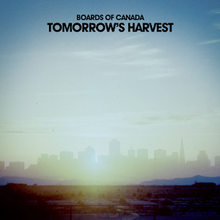
Boards of Canada – Tomorrow's Harvest

Boards of Canada are so highly regarded that they could do almost anything and their legions of fans would still find a way of regarding them as masterful. Me? I like their earlier albums, but I think all the build-up surrounding this release was horseshit dressed as a puzzle box. All the clever marketing of albums in the Spotify age serves to build expectation regardless of whether the music is any fucking good, especially because the music is unlikely to live up to the hype. I suppose that's the point – pique the interest, create some mystique and the pre-orders come rolling in. 

Boards of Canada cultivate this mystique to a frustrating degree. It's one thing for an artist to invite multi-faceted interpretations of their work; it's another thing entirely to create art that actually encourages deeper engagement. Such is the problem I have with Tomorrow's Harvest. While their revealing interview with The Guardian hinted at plenty of depths to explore and ponder over, Tomorrow's Harvest falls short of the mark by simply being too long and fragmented, and by including a handful of bland BoC staples that dilute what could otherwise have been a delirious and unsettling brew.

My initial expectations were low after The Campfire Headphase, but my anticipation of this release heightened with the video for 'Reach For The Dead'. I hadn't heard the track prior to seeing the video, and experiencing the music for the first time as Neil Krug's stunning video unfolded before me was revelatory. Since then I haven't been able to hear the song without imagining the visuals.

There's nothing here that comes close to equaling 'Reach For The Dead's majestic slow-burn, although the first five tracks, which include the single, do a decent job of setting the scene. After the album's longest track, the unique, disorientating 'Jacquard Causeway', and the brief, sinister 'Telepath', 'Cold Earth' feels almost comically dated, in that it sounds like it could have happily appeared on an earlier BoC album. It's a nice-enough tune in itself, but totally disrupts the eerie atmosphere that the first five tracks generate.

And that's it – I'm immediately disinterested, the spell is broken, the promise squandered. What were they thinking? Why is this track here? It's also perplexing to learn that they sourced a particularly hard-to-find effects unit in order to create one second of audio for this track. Considering how meticulous the Sandison brothers are in everything they do, I don't understand some of their aesthetic choices here, which is frustrating. For a while I kept listening to try and work out why. But now I just don't care.

Sunday, 30 June 2013

These New Puritans – Field Of Reeds

Writing about These New Puritans' new album Field Of Reeds feels somewhat redundant – as if it's beyond a music review. Trying to convey what it is about this record that is so utterly transporting means going beyond references to their previous albums; beyond the stories of recording a magnetic resonator piano, a hawk and breaking glass; beyond comparisons to music made by other artists. Field Of Reeds succeeds because this music, as challenging as it can be, feels natural. It takes a perfectionist like Jack Barnett at the helm to create something that sounds effortless, like water, like breathing, like feeling. Elusive yet anything but impenetrable, this album must be experienced on its own terms in order to appreciate its breathtaking beauty.

Try putting it on in the background and you'll soon find it irritating. Despite its atmospheric qualities, there's something insistent about these compositions. They don't demand your attention, but rather insinuate themselves into your consciousness. String and horn arrangements form the basis of the majority of these songs, but rather than being built around repeated melodic motifs, they're structured around phrases, around fragments. Initially it doesn't seem to cohere, but it's this tendency towards abstraction that sustains fascination. There's just enough structure to cling to: the piano ostinato in 'Fragment Two'; the metronomic drum pattern in 'V (Island Song)'; the synth arpeggios in 'Eternal Organ'. For the most part, though, it's a question of switching off the part of your brain that seeks pop-song payoffs and going with the heavenly flow.

There are two key lines in the stunning 'Nothing Else': "Just for a minute, nonsense and meaning swap places"; "Just for a minute, real life and dreaming swap places". Therein lies Field Of Reeds' magic – embracing a dream-like state is the only way to appreciate this album's meaning. It's not something to be understood, but rather something to be experienced. And it's truly like nothing else.